So, you’ve picked up the wonderful game of pool and are considering buying your own pool cue. If you have just been playing at a friend’s house or your local watering hole then it’s likely that the only stick you’ve ever used is the dreaded one-piece house cue. Those cues were fine when you were just “banging balls”, but now that you have taken an interest in the sport, it’s time to invest in some proper equipment to help you progress your game and enjoy the amazing game of billiards at a whole new level!
Key Takeaways:
- Most players should start with a 58-inch pool cue. This is the standard cue length and works well for the vast majority of players.
- A 19-ounce cue is the best starting weight. This range offers an excellent balance of power, control, and consistency while helping players develop a smooth, repeatable stroke.
- A 12.5-13mm tip is the most common and beginner-friendly option. Smaller tip sizes can offer increased precision and make it easier to apply spin, but they are generally less forgiving and require more accuracy.
- A medium tip hardness is the safest choice for most players. Medium tips offer a balanced blend of cue ball control, feel, and durability. Softer tips provide more feel and grip on the cue ball, while harder tips offer a firmer hit, greater accuracy, and longer-lasting performance.
- Most beginners should budget between $100 and $250 for a quality pool cue. The $150 mark is a particularly strong starting point, where quality materials and solid construction come together without overspending.
Why do I need my own pool cue?
When you buy your first two-piece pool cue you are going to see immediate benefits from its superior performance and consistency. As you play with your own stick you will become familiar with it and will start to establish a “feel” for the way it shoots. Cutting in the 8-ball or getting the cue ball to draw back just the right amount will become second nature. Having your own pool cue will really accelerate your journey to becoming a better pool player and that cue will be your trusted companion who is right there with you as you achieve your goals!
Function/Performance:
A decent quality, two piece cue will always outperform any one piece house cue at the local bar. Bar cues get roughed up! More often than not, they have severely misshapen tips, warped shafts, loose ferrules and questionable morals (they do live at a bar after all). Your own pool cue will have a much higher quality shaft with a tip, ferrule and taper designed to shoot straighter and provide more spin when you need it. The wood itself will be properly cured (aged) making it stronger, more durable, and better able to maintain its straightness. The cue will also be perfectly balanced and shaped to provide a smooth, comfortable stroke.
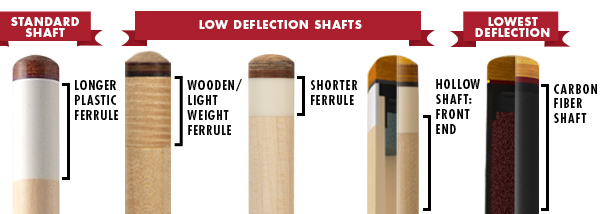
Pool cues take the next big jump in performance when they feature “Low Deflection Technology”. Low deflection cues are what the professional pool players use. They are built with special manufacturing processes and components that improve the accuracy of the shaft when applying side spin. They are also more forgiving on straight shots so low deflection cues are great for any skill level, including beginners.
Consistency:
Even buying an inexpensive two-piece cue will offer a greater level of consistency to your game. Just having a nice straight cue with a properly rounded tip will provide repeatable results giving you confidence that your equipment will perform as expected. This will allow you to focus more on your game and you’ll know that if you miss a shot it is not because of your pool cue.
Familiarity:
The results from consistent practice really shines through when you become familiar with your cue. Having a cue stick of your own to shoot with means that you’ll learn its capabilities and limitations, as well as your own. It will begin to feel like an extension of your body that will increase your confidence and help you get “in stoke” faster.
What features should I look for in my pool cue?
Pool Cue Shaft:
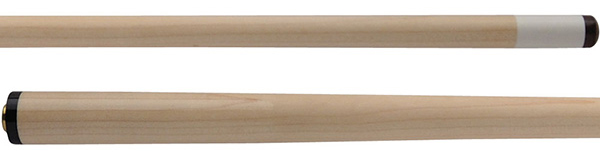
Good quality cues use North American Grade “A” Hard Rock Maple for their shafts because that type of wood has been found to provide the best feel, flexibility, and durability for all that is demanded of a pool cue shaft.
A few manufacturers have begun making pool cues with carbon fiber shafts. Carbon fiber cues represent the latest and greatest in performance and consistency but they are also considerably more expensive. For most players, a good quality maple shaft is more than enough and will perform reliably for many years or even decades.
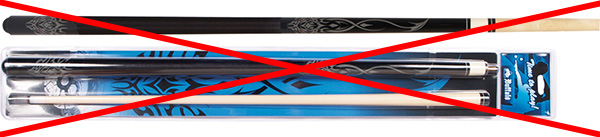
BEWARE OF: Low-quality, “big box store” cues that come in blister packs. Those cues are typically made from Ramin wood, an inferior Southeastern Asian wood known to be cheap, very grainy, and liable to warp if you look at it wrong. Other poor performing shaft materials like titanium and aluminum lack the flexibility and feel necessary to play well. Stay away from those types of pool cues!
Pool Cue Tip Styles:
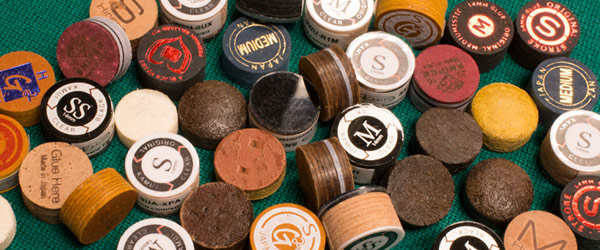
Most cues come standard with a medium hardness layered leather tip. Layered pool cue tips are constructed from multiple thin strips of leather that are pressed and glued together. This process creates a more consistent tip that holds it shape better (less maintenance). They are usually very high quality and we’d recommend staying with this type of tip unless you have a specific tip brand or hardness that you know you prefer to play with.
Layered tips are available in different harnesses, which will affect the feel of the hit and the longevity of the tip. Softer tips will hold chalk better, making them less likely to miscue, but the extra compression requires a bit more maintenance to keep a consistent shape. A harder tip requires less shaping, but doesn’t hold chalk as well which can lead to miscues if you don’t reapply chalk often. A medium tip hardness is designed to be the best of both worlds with plenty of grip and minimal maintenance.
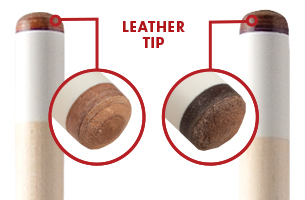
Some pool cue brands come with a tip constructed from a single thick layer of pressed leather that is formed to shape. These tips are typically less expensive and provide a distinct hit that is preferred by some “old-school” players, but they will require more maintenance to keep shaped properly. If the pool cue that you are looking to purchase comes with this type of tip, you might want to consider upgrading to a layered one.
We offer tip upgrade services and can install any of our 80+ tips on your new pool cue. Upgrading the tip is one of the best things you can do to improve the feel and playability of a pool cue BUT it is usually not necessary with a new cue purchase.
Pool Cue Tip Sizes:
The standard pool cue tip diameter is 12.75mm – 13mm, which is the perfect size for beginners. You can get plenty of spin and draw with the standard sized tip and it’s still very forgiving for straight shots. Some people like smaller tips, measuring 12mm or less, because they can create more cue ball spin with less effort but the trade-off is a smaller sweet spot that requires more precision to impart the desired effect.
Ferrules: What They Do
The ferrule is the small piece located between the tip and the shaft. It helps transfer energy to the cue ball while protecting the shaft from the impact of repeated shots. Different ferrule materials can slightly change the feel of the hit and overall durability.
- Aegis Ferrules: Offer a balanced combination of feel, consistency, and durability.
- Juma Ferrules: Known for their smooth hit and premium appearance, making them popular on many high-end cues.
- Ivorine and Phenolic Ferrules: Ivorine is a hard, durable material commonly found on high-performance custom cues, offering a firm, consistent hit and excellent longevity. Phenolic is even harder and is commonly used on break and jump cues to maximize power and energy transfer.
- Easy Maintenance: Ferrules are durable, but they should be cleaned and maintained carefully. Avoid abrasive cleaners or sandpaper, as scratches and wear can be difficult to repair. Liquid cleaners are typically the safest option for removing chalk and dirt buildup, and extra care should be taken when shaping or trimming tips to avoid accidentally nicking or scratching the ferrule.
Shaft Taper:
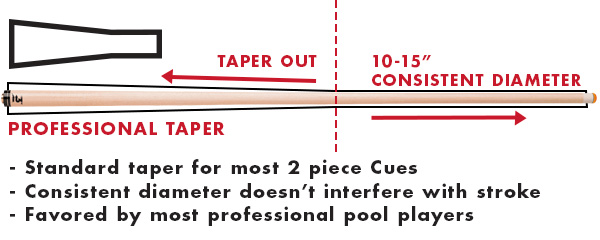
Most pool cues will have a Professional Taper shaft shape. With a “pro taper”, the shaft diameter will remain about the same size for a set length, usually 10 – 15 inches back from the tip, before it starts to increase to match up to the butt at the joint collar. This taper lends itself to ease of use and comfort with all bridge styles. It is not only the perfect place to start, but also the preferred shape of most professional pool players. Hence the name.
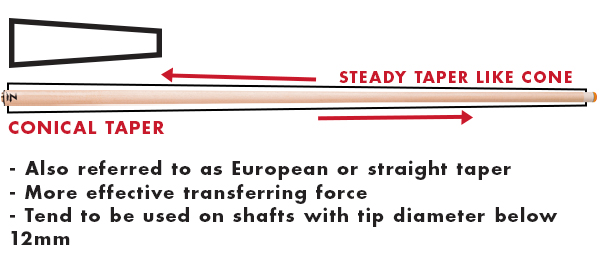
Many cues/shafts offer a conical taper (also called European or Straight Taper) where the diameter of the shaft rises at a constant rate from the tip to the joint. Shafts with conical tapers will usually have smaller tips, from 11.5mm to 12mm.
Pool Cue Weight:
The most common pool cue weight by far is 19 ounces. That is a perfect weight to start with if you don’t already have a preference. Heavier cues can get you more power but that makes controlling the cue ball speed more difficult. Extra light cues can provide more “touch” but less power. 19oz is a happy medium between power and control.
Most cues are weight-adjustable where you can add or remove weight bolts housed in a threaded channel beneath the rubber bumper. This allows you to tweak your cue’s weight so you can discover what feels the most comfortable for your game.
Pool Cue Length:
Most adult players use a 58-inch pool cue, which is considered the standard length for pool. While cue length is often associated with a player's height, it can also affect cue balance, back-hand positioning, and overall comfort during the stroke. A properly sized cue allows your grip hand to rest naturally near the balance point, typically around the wrap area, rather than forcing you to grip near the bumper or choke up farther forward on the cue. For most players, cue length is less important than weight and tip selection, but choosing the right length can improve comfort, stroke mechanics, and playability in tight spaces.
Pool Cue Length Guide:
|
Player Height |
Recommended Cue Length |
|
Under 4'8" |
48” Cue |
|
4'8" - 5' |
52” Cue |
|
5’ - 6'4" |
58” Cue |
|
Over 6’4” |
58” or Longer Extension Compatible Cue |
Shorter Cues for Kids and Tight Spaces:
Shorter cues are a great option for junior players who are still developing proper fundamentals. A cue that is too long can make it difficult to maintain a comfortable stance and smooth stroke.
Short cues are also popular in game rooms where walls, furniture, or other obstacles limit the amount of space available around the table. In these situations, a 48-inch or 52-inch cue can help you navigate difficult shots without sacrificing control.
Longer Cues for Taller Players:
While most players, including many professionals, use a standard 58-inch cue, some taller players prefer a 60-inch or longer cue for added reach and comfort. These cues can help reduce excessive bending and create a more natural stance at the table. Wingspan is also worth considering. Players with longer arms often prefer a longer cue or extension, while players with a shorter wingspan may find a standard-length cue more comfortable and easier to control.
Pool Cue Joints:
The joint pin is the part that connects the butt and the shaft of a two-piece pool cue. A two-piece pool cue is much easier to transport and allows for customization. There are many different joint styles out there but it isn’t something to be too concerned about for a beginner cue.
Most beginner cues will have either a 5/16 x 18 pin or a 3/8 x 10 pin. These are both common pins that will allow for upgrading your shaft in the future. The joint style can affect the feel of the shot but doesn’t really have much influence on the overall performance.
The Grip Area (Wrap):
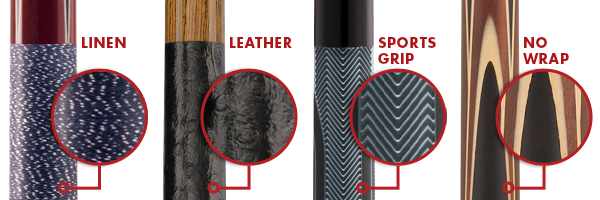
The grip area of a pool cue can be made from nylon, tightly spun linen (Irish Linen), leather, synthetics (rubber or silicone), or simply finished wood. Each style has a different feel and players will develop a preference that suits their play style and desired amount of grip.
Wraps vary in grip from slick (linen) to tacky (synthetic/sport), with leather and wrapless falling somewhere in the middle. Players who tend to sweat may find that a linen or synthetic wrap will help absorb moisture better than a leather or wrapless cue. A Nylon wrap should only be found on cheap cues, and we would recommend steering clear of them because they are prone to unravel.
Types of Pool Cues (Playing, Break, Jump, Break/Jump)
Not all pool cues are designed for the same purpose. While a playing cue is the only cue most beginners need, specialty cues can help improve specific parts of your game as your skills develop. Most players own only a playing cue. A break cue is typically the first specialty cue players add, followed by a jump cue or break/jump combo as competitive play increases.
Playing Cues:
Playing cues are designed for everyday shots and are the most important cue in your bag. Most playing cues are 58 inches long and weigh between 18 and 21 ounces, with 19 ounces being the most common.
Best for: Everyday play, leagues, and tournaments.
Break Cues:
Break cues are built to generate maximum power on the opening break shot. They typically feature harder tips and a stiffer construction to help transfer more energy into the rack. Most break cues are standard at 58 inches and can weigh from 18 to 25+ ounces, depending on player preference.
Best for: Players looking for stronger, more controlled breaks.
Jump Cues:
Jump cues are shorter cues designed specifically to help lift the cue ball over obstructing balls. Their compact size and lighter weight make jump shots easier and more consistent than using a standard playing cue. Most jump cues measure 40 to 48 inches long and weigh around 12 ounces. They also typically feature a larger, harder tip with a flatter tip radius, allowing the cue to transfer energy more efficiently into the cue ball and helping players execute jump shots with less effort.
Best for: Players who frequently encounter jump-shot situations in league or tournament play.
Break/Jump Cues:
Break/Jump cues combine the functions of a break cue and a jump cue into one versatile design. In their full configuration, they are typically the standard length and perform like a dedicated break cue. By removing the rear portion, the cue becomes shorter and lighter, making it easier to lift the cue ball for jump shots.
Best for: Players who want the versatility of both a break cue and jump cue in a single package.
How much should I expect to pay for a good-quality pool cue?
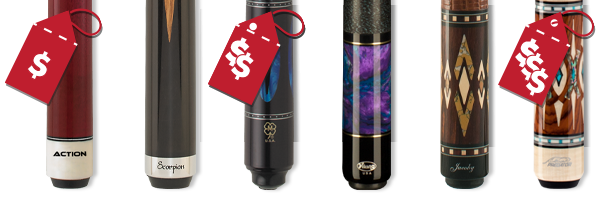
Beginner Pool Cues Cost $70 - $250
A decent two-piece cue can be purchased for just over $70, however, the majority of beginner cues are priced in the $100-250 range. Typically, you’ll see better quality materials used in the cues around the $150 mark. The quality of the materials used makes the $150 price point a great place to start when setting up your budget.
Cues in this price range will come with a Hard Rock Maple shaft, professional taper and a good, layered tip. These cues are the perfect entry to pool, and should meet the needs of just about every player.
 Frank Says: "Calling them “beginner pool cues” just because they are affordable doesn’t really do these quality cue sticks justice. If you want to get a great value on a new pool cue that will help you improve your game, our HUGE selection of pool cues under $250 is the place to shop!
Intermediate/League Player Pool Cues Costs $250 - $450+
The Intermediate/league player should expect to pay $250 to $450+ for a new pool cue that will meet their performance needs. These serious pool players tend to have developed specific preferences and will want to have a cue with low deflection technology so they can take their game to that next level.
Advanced/Professional Pool Cues Cost: $450+
Advanced/professional caliber players can get a pool cue with the latest and greatest technology starting around $450. That really means getting the top-of-the-line shaft since that is where the performance lives. The best shafts sell for around $300 - $600 on their own so the remainder of the price will come from the butt half of the cue.
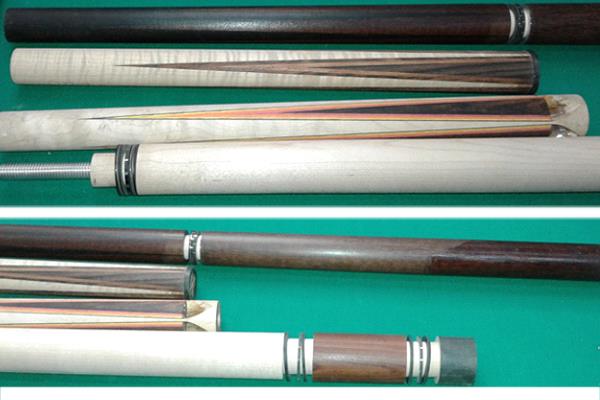
The elaborate designs and artisan construction using exotic woods and precious inlay materials like abalone, mother-of-pearl, turquoise, malachite, etc is what drive the price up, sometimes into the thousands of dollars. These cues make a statement and are unlike any other piece of sporting equipment. Where else would you play a game using a hand-crafted work of art?
Other things to consider:
Pool Cue Design
As we mentioned, the design of the pool cue can be a major factor contributing to the price of the pool cue but it does not affect the performance. Therefore, the best value can be found on cues with the simplest designs as long as those cues have the same functional features as their more elaborate/expensive brand mates. As an example, the least expensive Joss Pool Cue that we carry will play exactly the same as the most expensive one even though they can differ in price by more than $500.
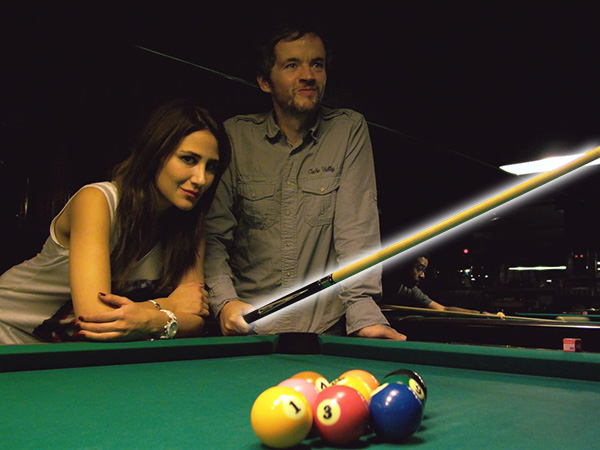
There is something to be said for an elaborate pool cue, however. They offer an additional source of personalization for each player. Not everyone has the same preferences, and pool cues are a perfect place to express oneself.
People in the pool hall will notice and admire a decked out pool cue and there is the intimidation factor too. The best reason to spend more on the design is because that is the pool cue that speaks to you. This is YOUR cue and you’re going to go through a lot together. Crazy wins, tough losses, good rolls and bad, that cue will be with you through it all for years to come. If it will make you happy, spend the extra money now instead of wishing you had until you are ready to purchase your next one.
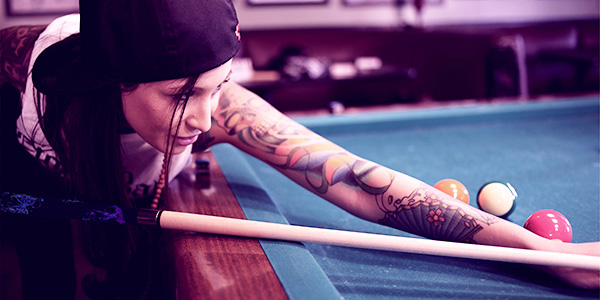
Or go the other direction and get a less expensive cue with a crazy skull graphic or a hearts and butterflies designs if that’s what you’re in to. It’ll be a conversation starter and will match your personality. You could always pair it up with a high performance shaft to have it play at the highest levels. If you have any questions about shaft upgrade options please give us a call and we can help pair you with the perfect cue to match your game, style and budget! Ready to find your cue? Browse our full pool cue selection to compare options by weight, shaft type, and price.
Warranty
A pool cues warranty, set by the manufacturer, is something to consider and can make you “feel all warm and toasty inside”. Cues are pretty stable though when properly taken care of, so the best thing that you can do to make sure you have a good stick that won’t have any problems is give it a thorough examination (especially for straightness, nicks, and dents) before you start shooting. If anything is off, contact our top rated service specialists and we’ll replace it.
Pool cues are always backed with at least a 1 year warranty that covers manufacturing defects. That assures that you will be taken care of should something be flawed that isn’t noticed on the initial inspection. They typically do not cover warpage or wear-and-tear like dents, scratches or tips that popping off. If pieces that are supposed to be solid come loose or break during normal use you will be able to get it repaired or replaced under the warranty.
Many mid-level and higher end cues will have a limited lifetime warranty. They tend to cover the same the same situations listed above but for life. Some manufacturers have a full lifetime warranty that includes warpage! That’s pretty solid coverage for certain.
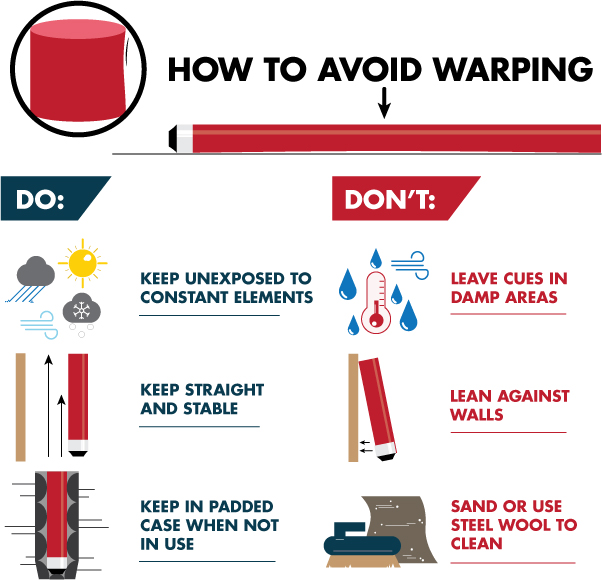
Warranties are not transferable, so they can only be used by the original owner. You also need to have proof that you purchased it from an authorized dealer. You may also need to register the cue with the manufacturer in order to activate your warranty.
What if I’m not happy with the Pool Cue I buy?
Now that you have all of the information you should feel pretty comfortable with making a decision on what pool cue to purchase but you won’t know for sure that you’ll love it until you can actually hit some balls with it.
NO WORRIES! We’ve been selling cues online since 2004 and we get it. It is EXTREMELY important to us that you are happy with your purchase. That’s why we have a 60-day, 100% satisfaction guarantee on any new products purchased from PoolDawg, including chalked pool cues. If you're not completely satisfied, we'll help you exchange it for another cue or return it for a refund. Please note that returns on cues priced over $600 are subject to a 10% restocking fee. No hassles! We'll help you find the right cue or refund your money if that's what you prefer.
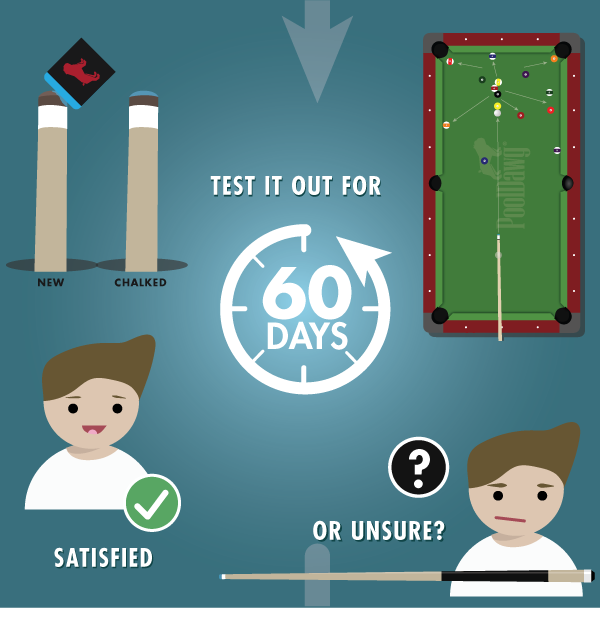
As always, if you need any help selecting the right pool cue for your game and budget, call us toll free at 866-843-3294 and one of our billiards specialists will be happy to help you out!
Beginner Pool Cue FAQs
How do I know what pool cue is right for me?
The right pool cue depends on two things: how much you want to spend and how seriously you plan to play. If you're just looking for a reliable cue to enjoy the game, a quality maple cue is a great place to start. If you're serious about improving and playing regularly, investing in a low-deflection cue can help you develop more consistent cue ball control and position play as your skills progress.
What is the most popular weight for a pool cue?
19 ounces is the most popular pool cue weight by far. It offers a great balance of power and cue ball control, making it an excellent starting point for most players.
What cue length should I choose based on my height or room size?
A 58-inch cue is the standard length and works well for most adult players. Shorter cues are often used by younger players or in rooms with limited space, while some taller players prefer a longer shaft for added reach.
Do I need different cues for playing, breaking, and jumping?
Not necessarily. A playing cue can be used for every shot on the table, but break and jump cues are designed to perform those specialized shots more effectively. Many players add a break cue first, then a jump cue as their skills and competitive play advance.
Should I buy a one-piece or two-piece cue?
A two-piece cue is the best choice for most players. In addition to being easier to transport and store, a quality two-piece cue will typically outperform the one-piece house cues found in bars and pool halls, offering better materials, consistency, and overall playability. Two-piece cues also allow you to upgrade performance with different shafts, giving you access to new technologies and performance characteristics without replacing your entire cue.
< Back to Buying GuideBest Selling Pool Cues at PoolDawg >
Thank you for your comments! If you would like to learn more about pool I would recommend that you check out some of the other articles in our PoolDawg Academy. You'll find 100's of Free Billiard Training Articles. The article/videos with Florian "Venom" Kohler are especially popular and cover almost any topic you want to know about!
When you are ready to get that new pool cue I'd highly recommend that you give us a call so we can help match you with the right cue for your game and budget. We've got hundreds of models and our staff can help you narrow down the choices based on your preferences. You'll definitely be able to get a very nice cue in the $200 - $500 price range!
Thanks again!